
This chapter introduces tableBASE RESTConnector, explains its relationship to tableBASE, and describes how to configure and deploy APIs that interact with tableBASE data.
A full featured table manager, tableBASE is specifically designed to enable the rapid development of applications that require many table reads. It manages tables in memory and allows multiple users to concurrently read, modify, and permanently store data.
tableBASE is a complete infrastructure for defining, building, maintaining, controlling, and using table data. Application performance and productivity can be improved by placing tables with these types of data into memory.
It is designed to work only with memory-resident tables and to help improve performance and productivity issues relating to tables.
The RESTConnector is an enhancement to tableBASE that opens the data stored in tableBASE as RESTful APIs. The data can be consumed and utilized by more modern applications such as mobile and cloud-based applications.
RESTConnectoris designed as a no-code approach to deploy APIs on IBM® System Z. The only change an API designer must do in the back-end system is customize the copybook which is later uploaded to IBM® z/OS Connect to create a Service Archive File (.sar). A detailed step-by-step approach on how to configure and deploy APIs can be found in this guide.
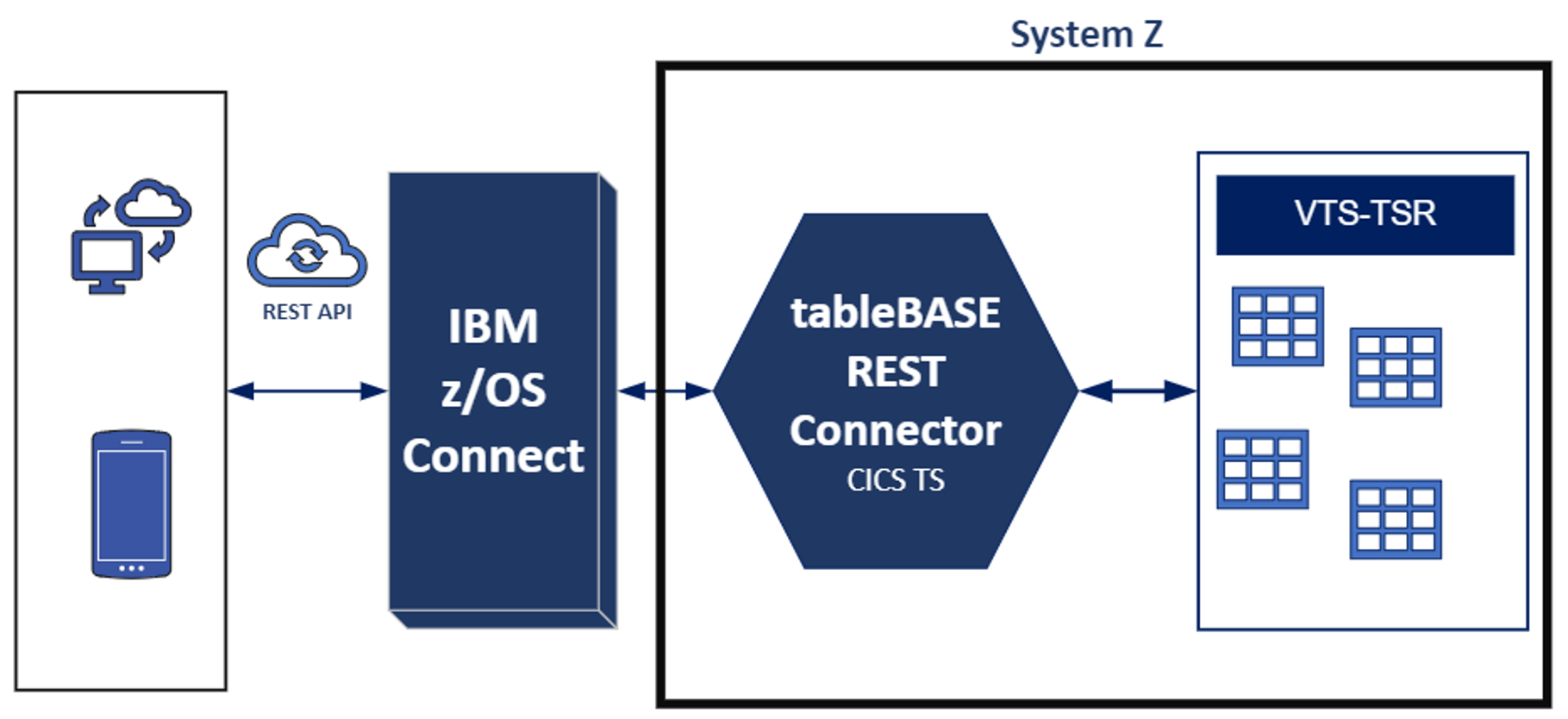
A VTS-TSR containing tableBASE tables processed through the RESTConnector using IBM z/OS Connect creates a REST API. More information can be found at the topic about z/OS Connect Open API 2 on IBM’s website.